
Course category
Philosophical
51 courses
Topics

Afterlife
In August, Taoists and Buddhists celebrate the Ghost Festival in China, as an occasion on which the dead come to dwell among the living, who in turn provide these departed spirits with offerings and other rituals designed to alleviate any suffering they might experience in the afterlife. In Japan, a variation of this festival, known as Obon, will be held between Saturda August 13 and Monday August 15.
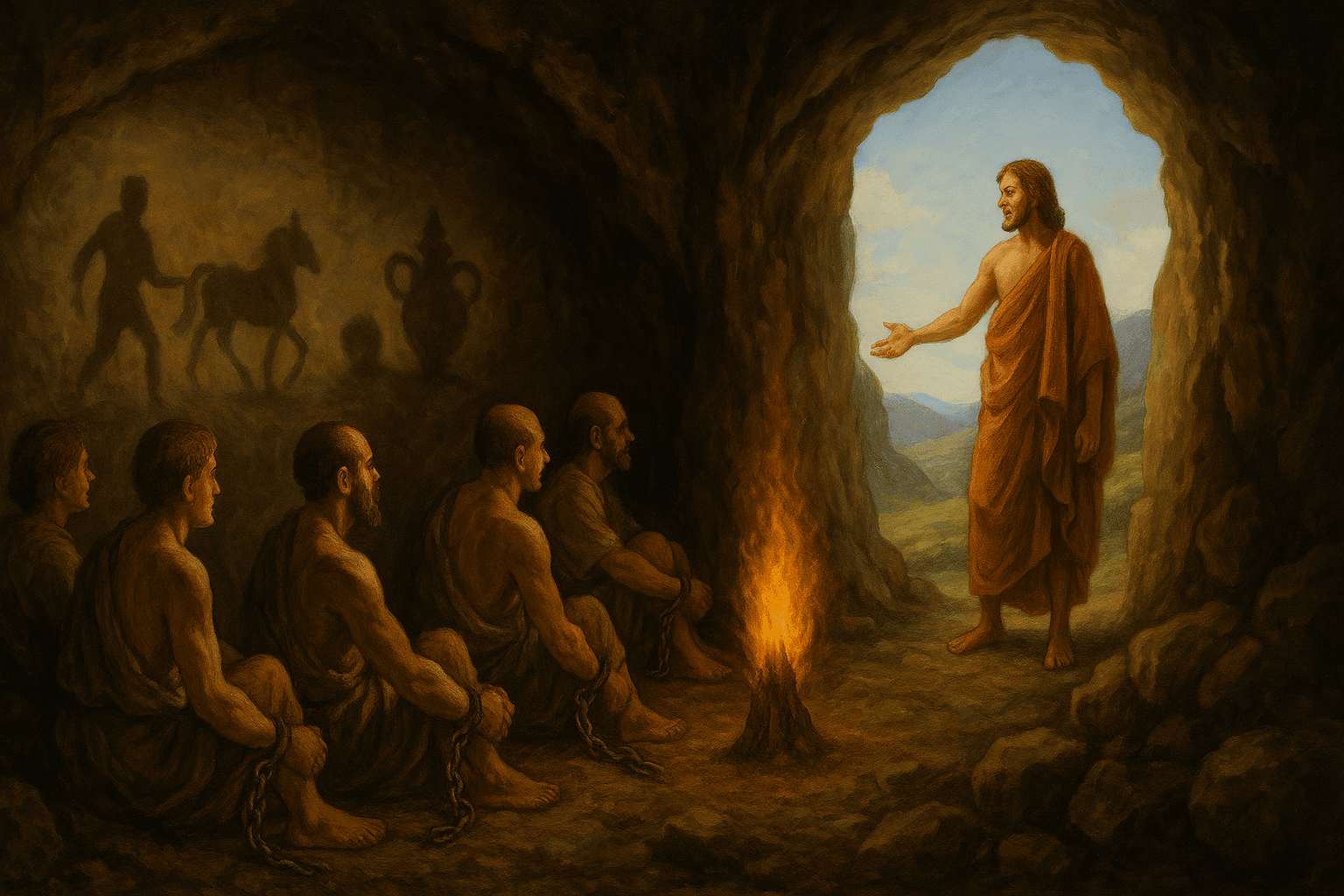
Allegory Of Caves In Diverse Religious Traditions
The allegory of the cave is a philosophical concept introduced by the ancient Greek philosopher Plato in his work “The Republic”. It describes a scenario where people are chained in a cave and only able to perceive the shadows of objects projected on the cave wall, mistaking those shadows for reality. The allegory serves as a metaphor for the limited perception and understanding of the material world, as well as the possibility of attaining higher truths through philosophical inquiry and enlightenment. While there may not be an exact equivalent of the allegory of the cave in all religions, there are similar concepts or teachings in various religious and spiritual traditions that convey similar ideas of illusion, ignorance, and enlightenment.
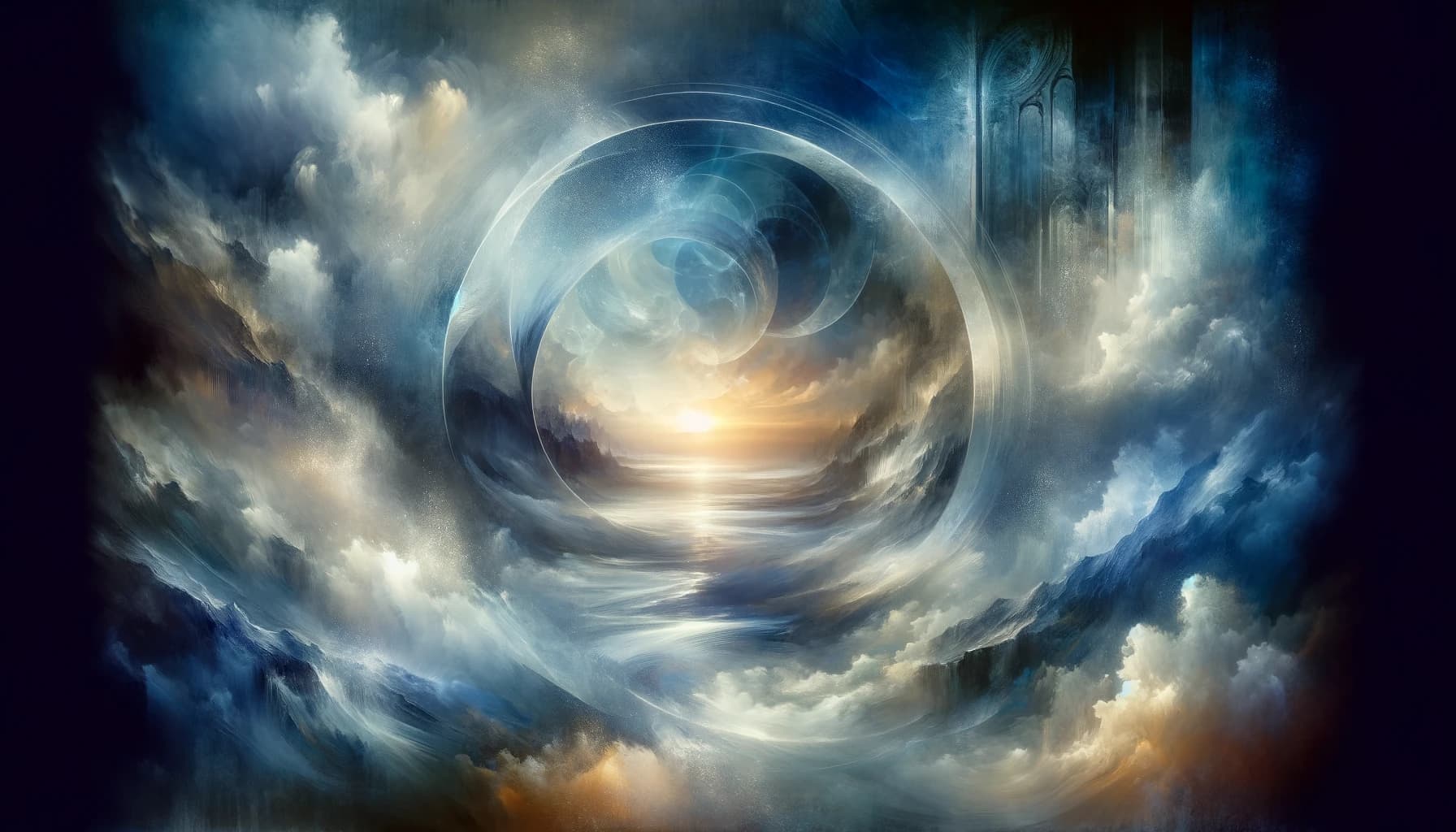
Apophatic Language
Have you ever stood beneath a star-studded sky, overwhelmed by its vastness and the mysteries it holds? That sense of awe, the feeling that words fall short in capturing the immensity of the experience, is precisely what apophatic language seeks to evoke in religious traditions across the globe.
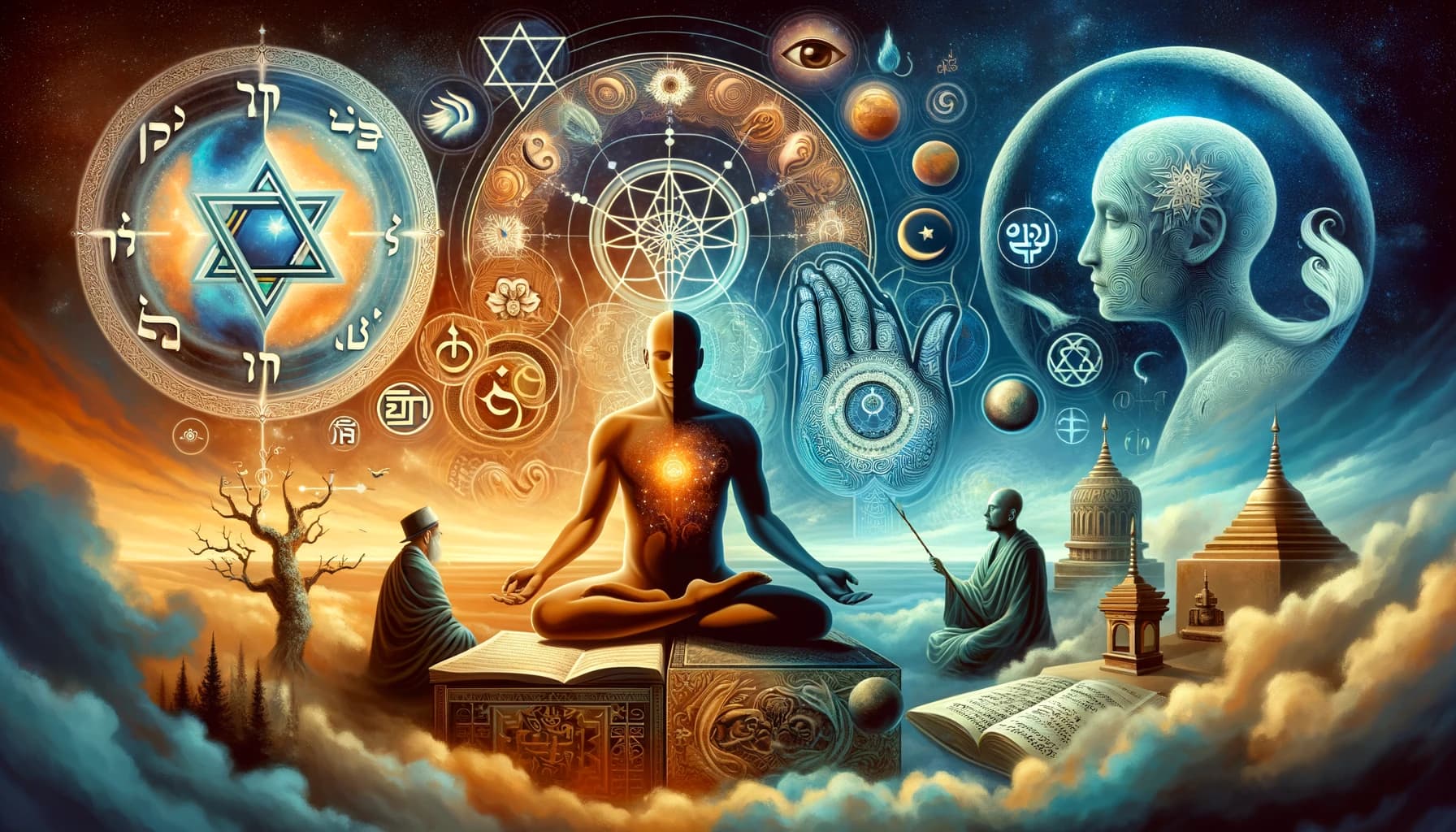
Are we more than our physical bodies?
Human existence encompasses more than the physical realm. Many world religions acknowledge the presence of non-physical dimensions within human beings, such as the soul, higher consciousness, and spiritual realms.

Be Authentic To Flourish
Across all religions and traditions, prophets, philosophers and sages have emphasized on leading an authentic life. Living authentically means being true to ourselves, our values, and our beliefs, even when faced with societal pressures or expectations.
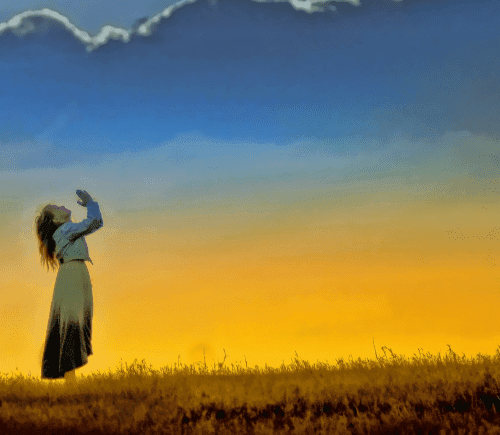
Belief in a Higher Power
The belief in a higher power existed long before we formalized religions and the idea of God. Even in our earlier state as hunter-gatherers, we observed nature and recognized the forces beyond our control. Our fears and anxieties, as well as our sense of wonder, led us to worship. We sacralized aspects of the natural world, like animals or rocks or stars, in systems of belief in a higher power.
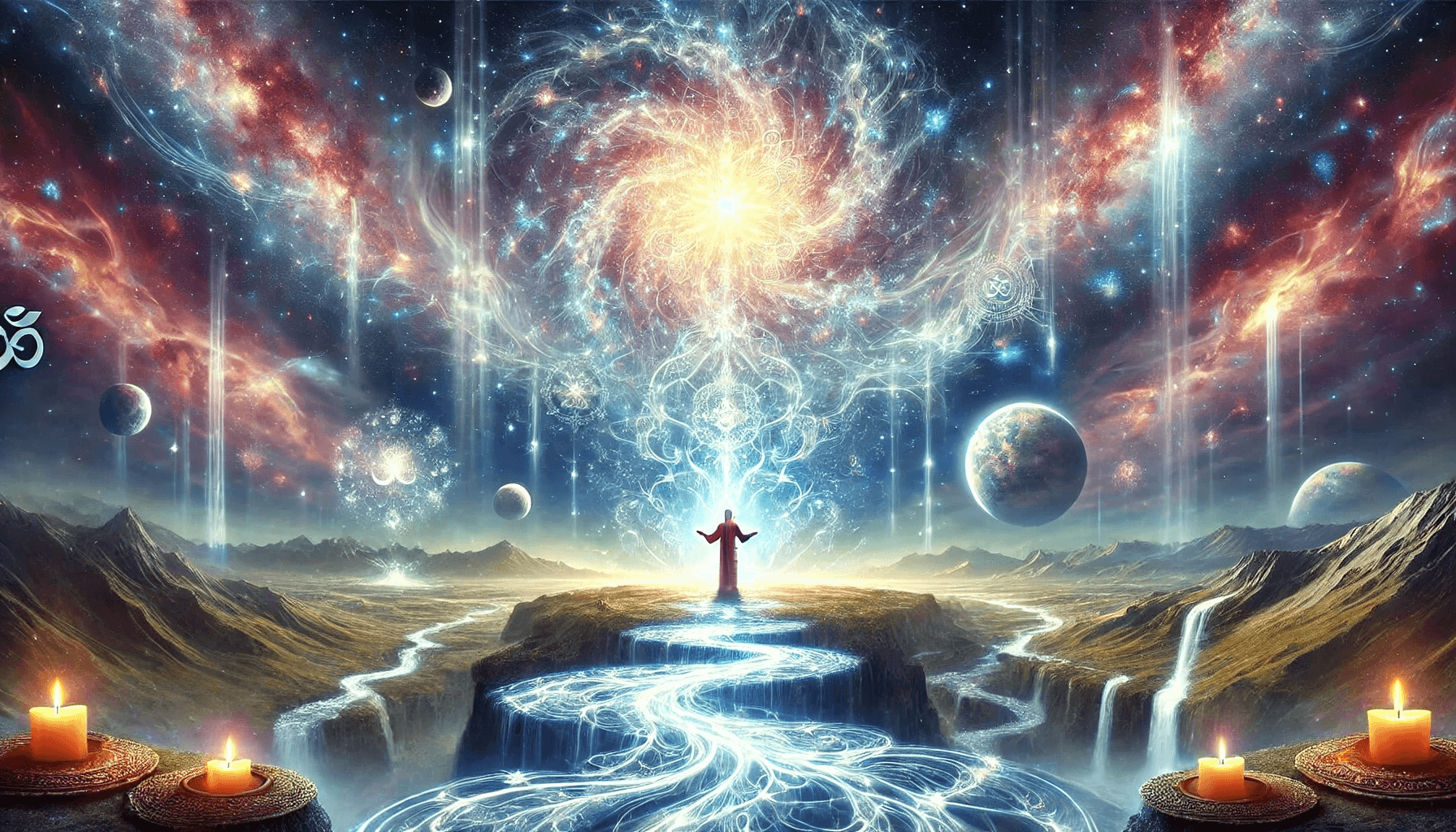
Beyond The Self: Exploring The Sacred Connection With The Divine
Union with the Divine is a central theme in most religious and spiritual traditions across the world. This concept refers to the deep, often mystical, connection between the individual soul and a higher power, whether it be God, the cosmos, or an ultimate reality. This union represents the pinnacle of spiritual achievement, where the barriers between the self and the divine dissolve, leading to a profound sense of oneness, peace, and fulfillment.It involves the transcendence of the ego or individual self.
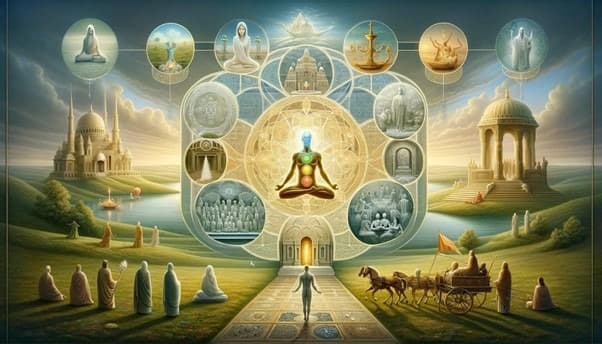
Body As A Temple
Though most religious teachings stress the importance of not indulging too much in bodily pleasures, they emphasise the body’s role as a dwelling place for the divine or the sacred spark. In Christianity, for instance, the Apostle Paul refers to the body as “the temple of the Holy Spirit” (1 Corinthians 6:19). This perspective underscores the reverence for the human body as a creation of the divine, deserving of care, respect, and discipline.
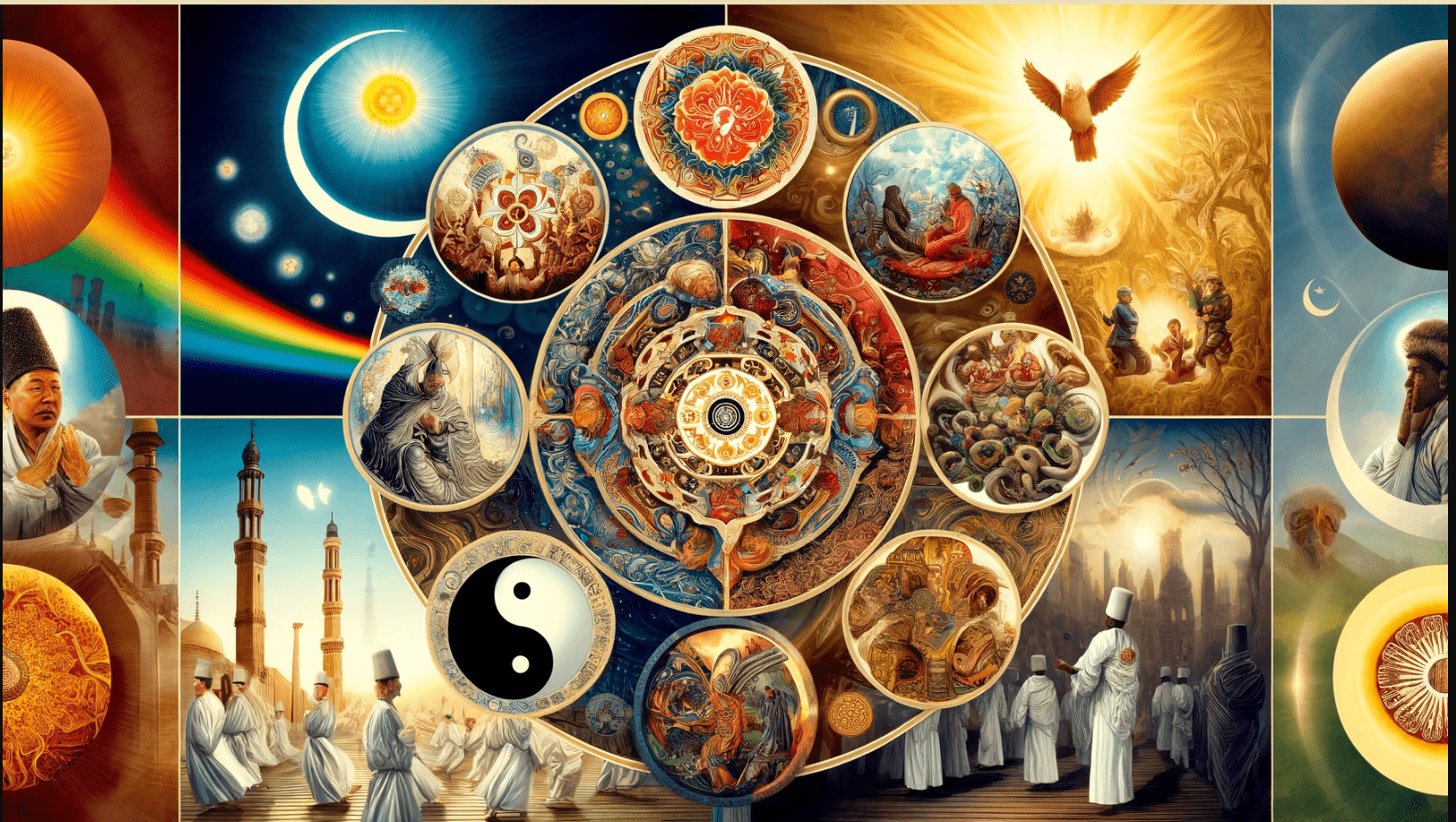
Circularity
Circularity is a recurring theme in many religious traditions across the world. It represents the cyclical nature of existence, the interconnectedness of all things, and the eternal return of life, death, and rebirth.
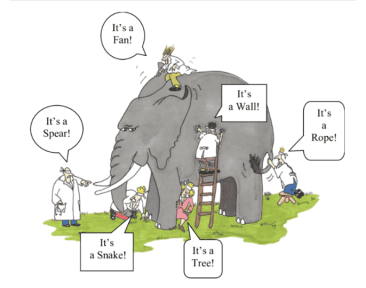
Common Threads Across All Religions
So many religions, so many paths to reach the same goal. I have practiced Hinduism, Islam, Christianity, and in Hinduism again, the ways of the different sects. I have found that it is the same God towards whom all are directing their steps, though along different paths. -Swami Ramakrishna, Hindu Monk

Compassion
‘Imagining what it is like to be someone other than yourself is at the core of our humanity. It is the essence of compassion, and it is the beginning of morality.’ Ian McEwan, a British author
Concept of One God
Religion is often associated with the concept of God, but there are many different conceptions of God. Children are naturally curious about different religions and can easily incorporate the concepts of different religions into their lives. As adults, we should also be open to learning about different religions and respecting the beliefs of others. All religions are essentially searching for the same ultimate truth, even if they use different names and metaphors to describe it. We should embrace diversity and pluralism in religion, and see different religions as different expressions of the same human yearning for meaning.

Death
In 2014, author and grief specialist, Angie Cartwright, founded August 30th, (her mother’s birthday) as National Grief Awareness day, an occasion for people to reflect upon and process major losses in their lives, including the deaths of loved ones.
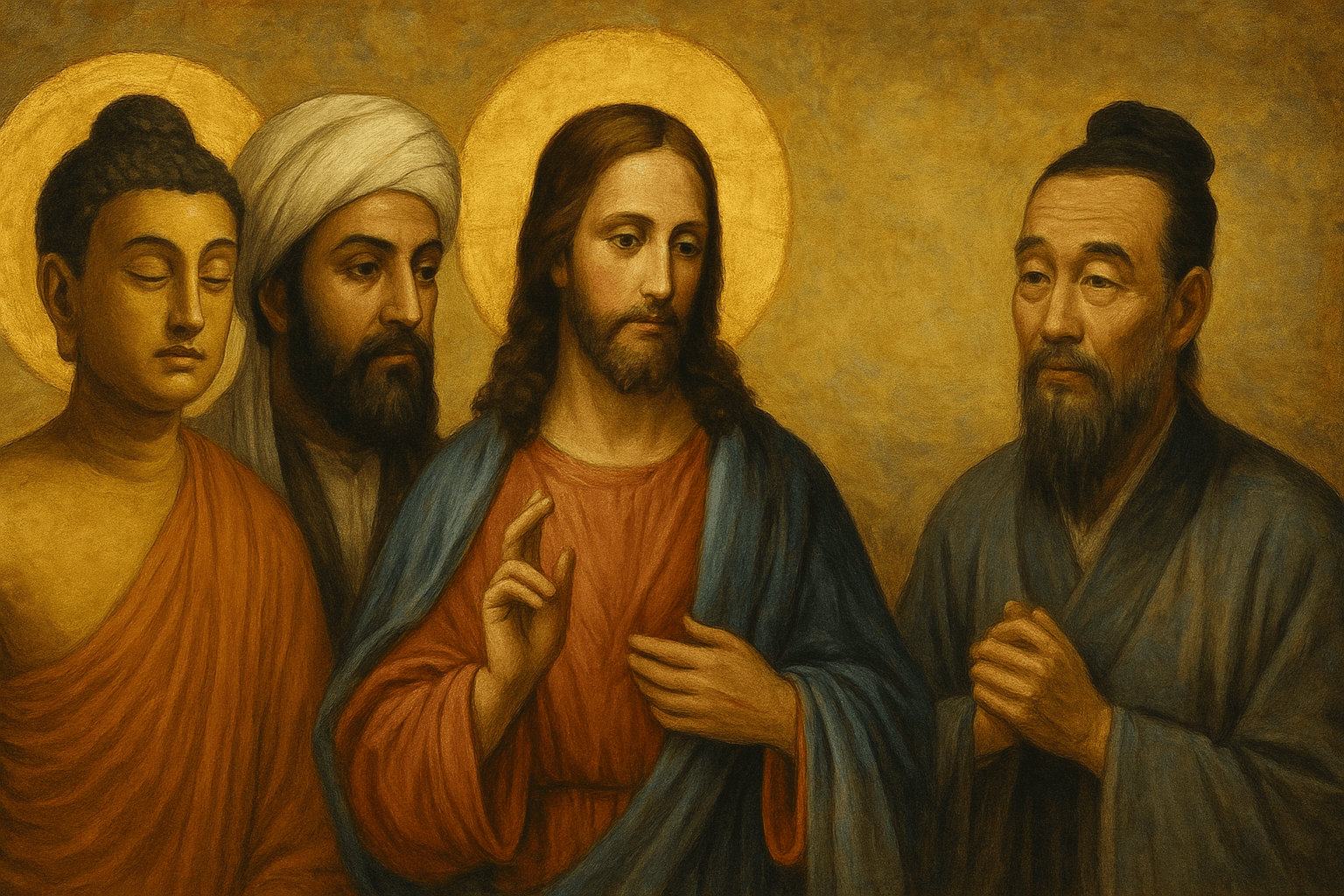
Deification Of Prophets After Death: A Common Theme Across All Religions
Most religious traditions have come to deify their prophets in one form or another, viewing them as something more than human. But these prophets themselves may not have viewed themselves the same way at the time and may have seen their teachings as universal, not belonging to any one religion or path. The Buddha, Muhammad, Confucius, and many other prophets were emphatic that they were not gods, insisting they were human and utterly fallible.
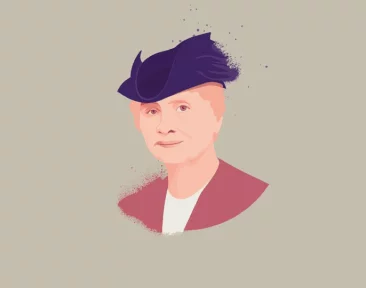
Flawed Human Condition
Every year, June 27, the birthday of Helen Keller, is celebrated as a national holiday in the U.S. Keller was able to overcome her tremendous physical limitations, becoming the first blind and deaf person to earn a bachelor’s degree. Her tireless work as an activist has also had a lasting impact on improving awareness of and accommodations for blind and deaf individuals, and others with physical disabilities.If we reflect more deeply, we will notice that all human beings are actually born with many physical limitations in the grand scheme of life. Did you know that our eyes cannot see everything in the physical universe? Our limited spectrum excludes infrared light, ultraviolet light and much more that other organisms can access.
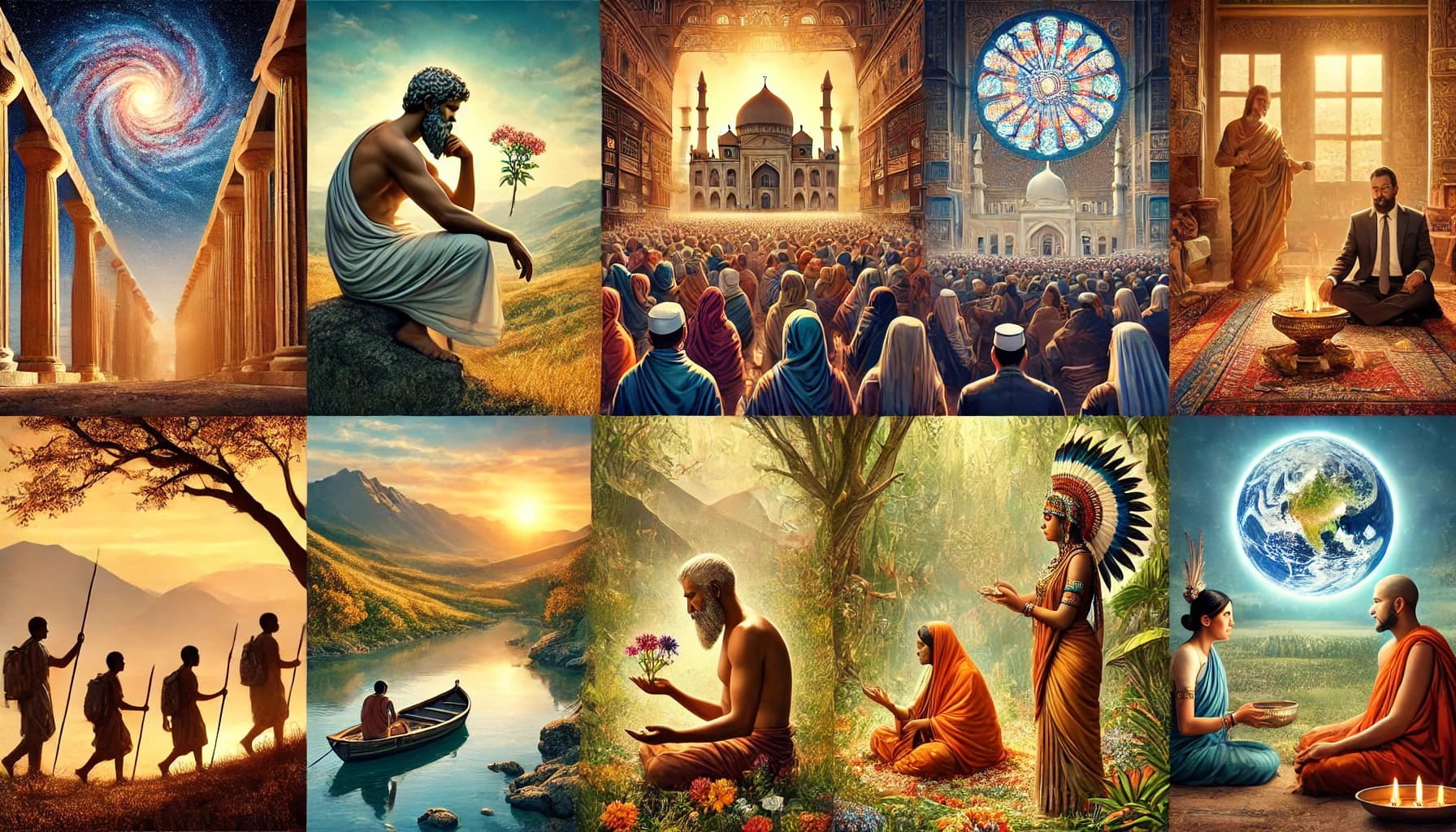
Gratitude
Gratitude is a universal value found at the core of most religious traditions, as most religions view life’s blessings as gifts from a higher power.
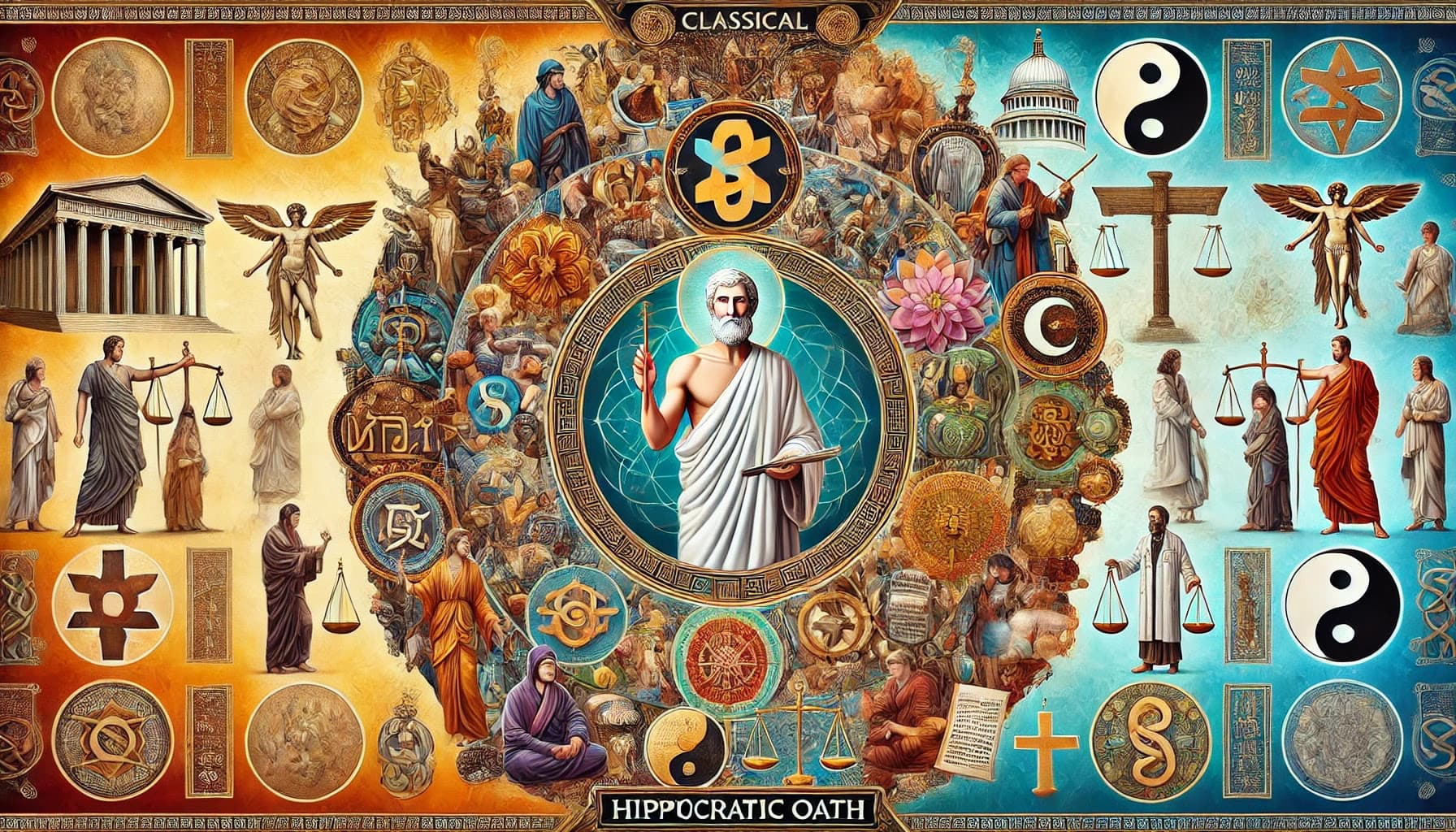
Hippocratic Oath
The Hippocratic Oath is traditionally attributed to Hippocrates, a 5th-century BCE Greek physician often regarded as the “Father of Medicine.” While it originated in ancient Greece, its core principles and medical ethics include beneficence (doing good), non-maleficence (avoiding harm), and patient autonomy. These health care ethics have resonated across cultures and throughout history and are aligned with all major religious and ethical frameworks:
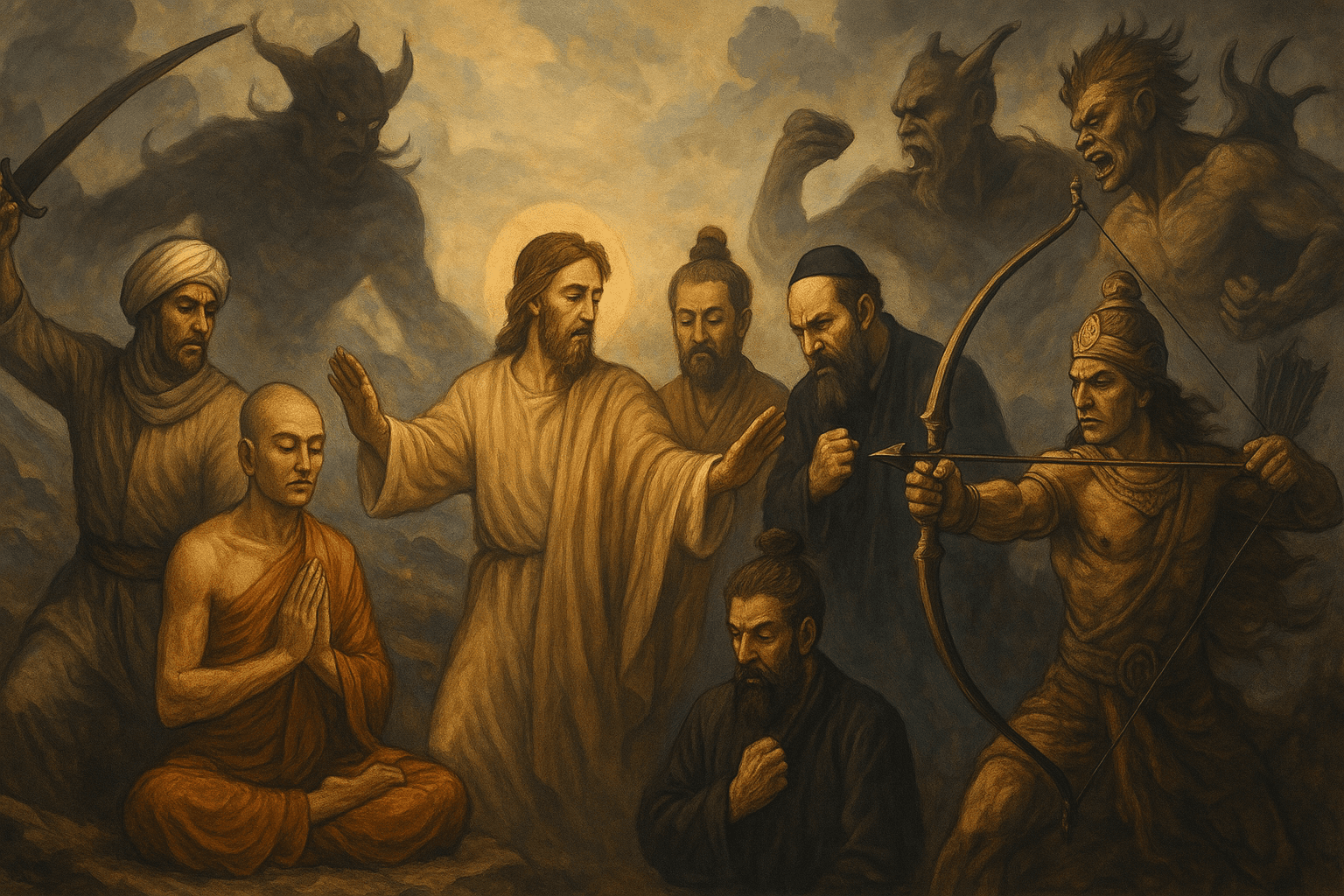
How Religions Guide The Fight For Good And Justice
Spiritual struggle in Islam is called Jihad. However, the concept of jihad has parallels in various religions and belief systems, as the spiritual path is often understood to be rife with struggles of many kinds. From inner battles with ego to outer defenses of justice, the journey toward righteousness is marked by resistance, resilience, and transformation.
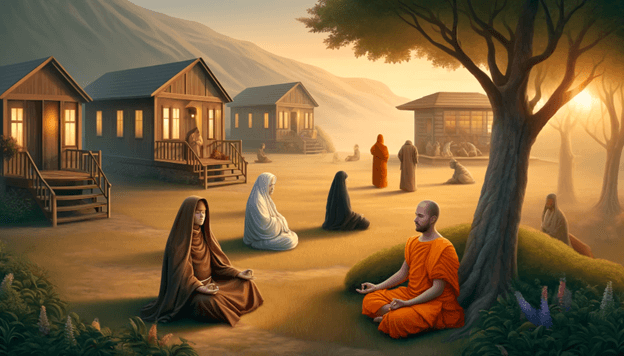
Humility
Across the diverse tapestry of human faith, a single thread binds many traditions together: the virtue of humility. Though expressed in varied ways, humility serves as a cornerstone for many religions, promoting a sense of perspective, selflessness, and reverence.
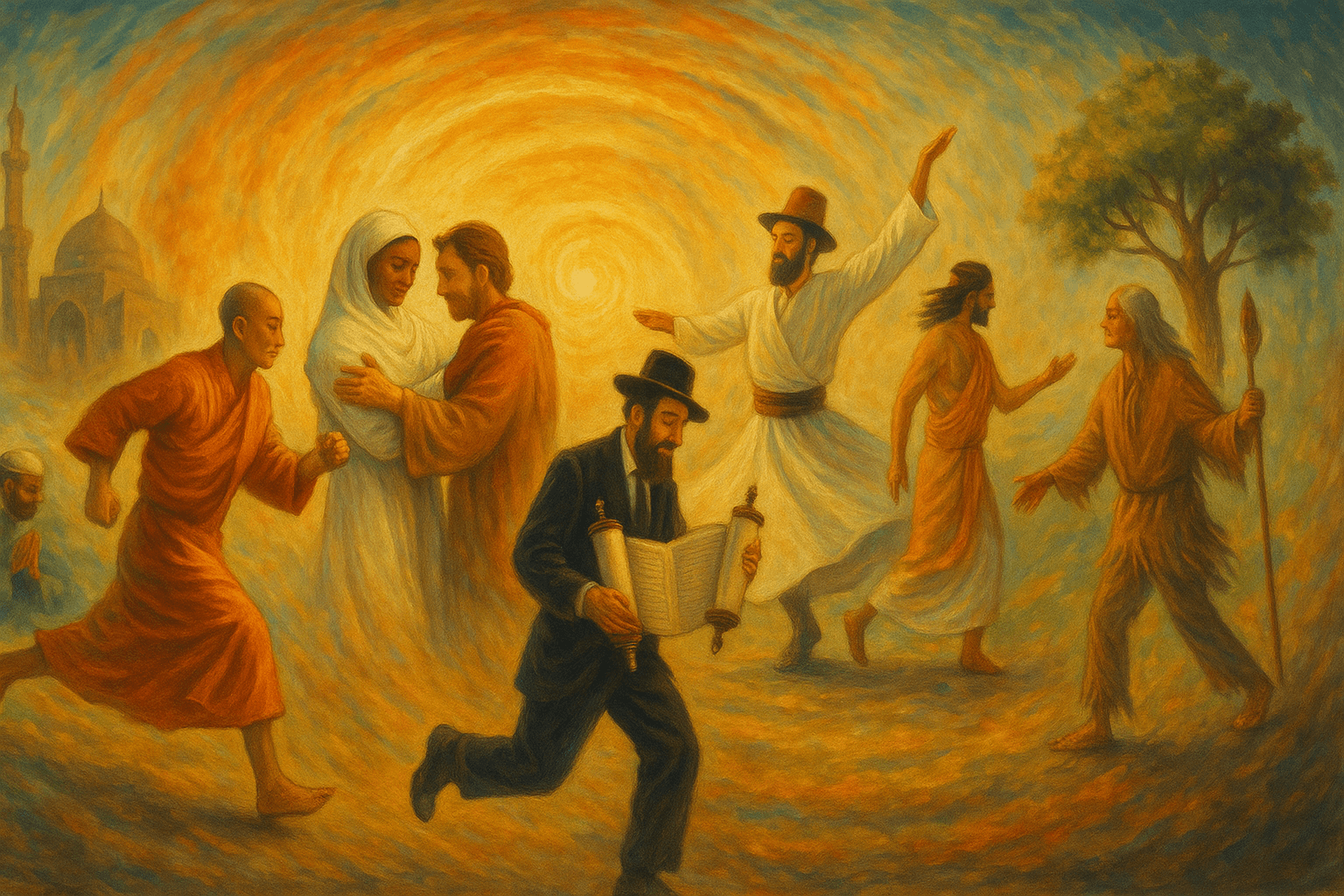
Key learnings from different religions
From the whispered prayers in ancient temples to the vibrant chants in modern mosques, humanity has long sought meaning in life’s profound mosaic of joys, sorrows, and mysteries. While each spiritual tradition speaks through its unique language and symbols, a careful listening reveals a shared repository of wisdom. Across diverse faiths, a profound and universal guidance emerges: urging us to embrace compassion, cultivate understanding, and deeply honor the sanctity of existence.”
Karma
The word “karma” comes from the Sanskrit word “karman,” which means “action.” In the context of karma, “action” refers to both our physical actions and our mental actions, such as our thoughts, words, and intentions. All Hindu, Buddhist, sikh, Jain and all Indian philosophies believe in the law of karma.
Kindness
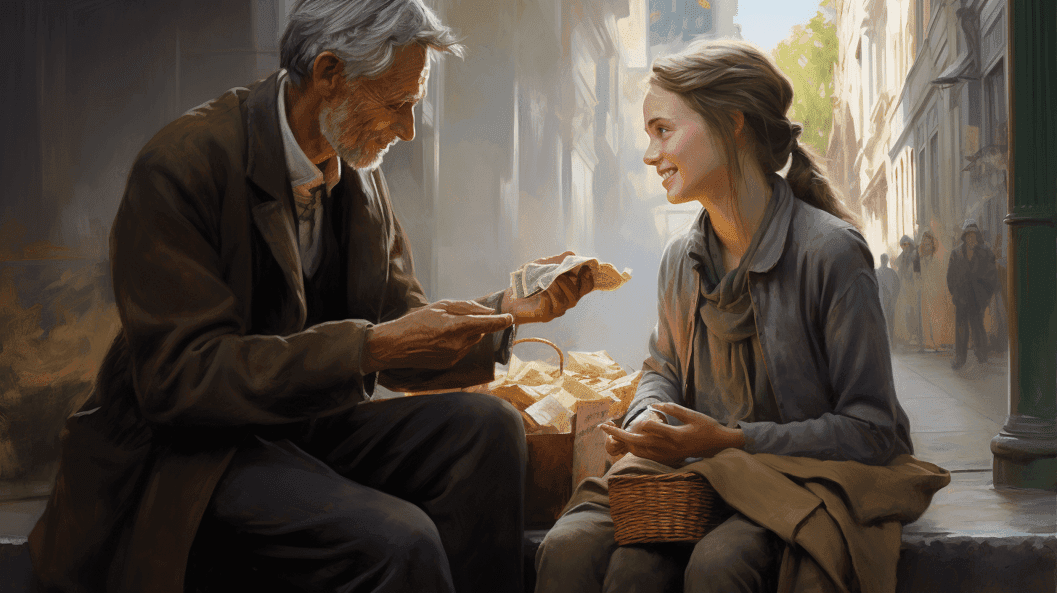
My parents celebrated my tenth birthday in an unusual way. My mother told me that it will be a very special celebration. I expected some wonderful present and I did get a very special present, but not the kind I was expecting.
Know thyself
“Know thyself” is a phrase that has been attributed to various ancient philosophers and sages, and it has been interpreted and used in different ways across different religions and spiritual traditions.
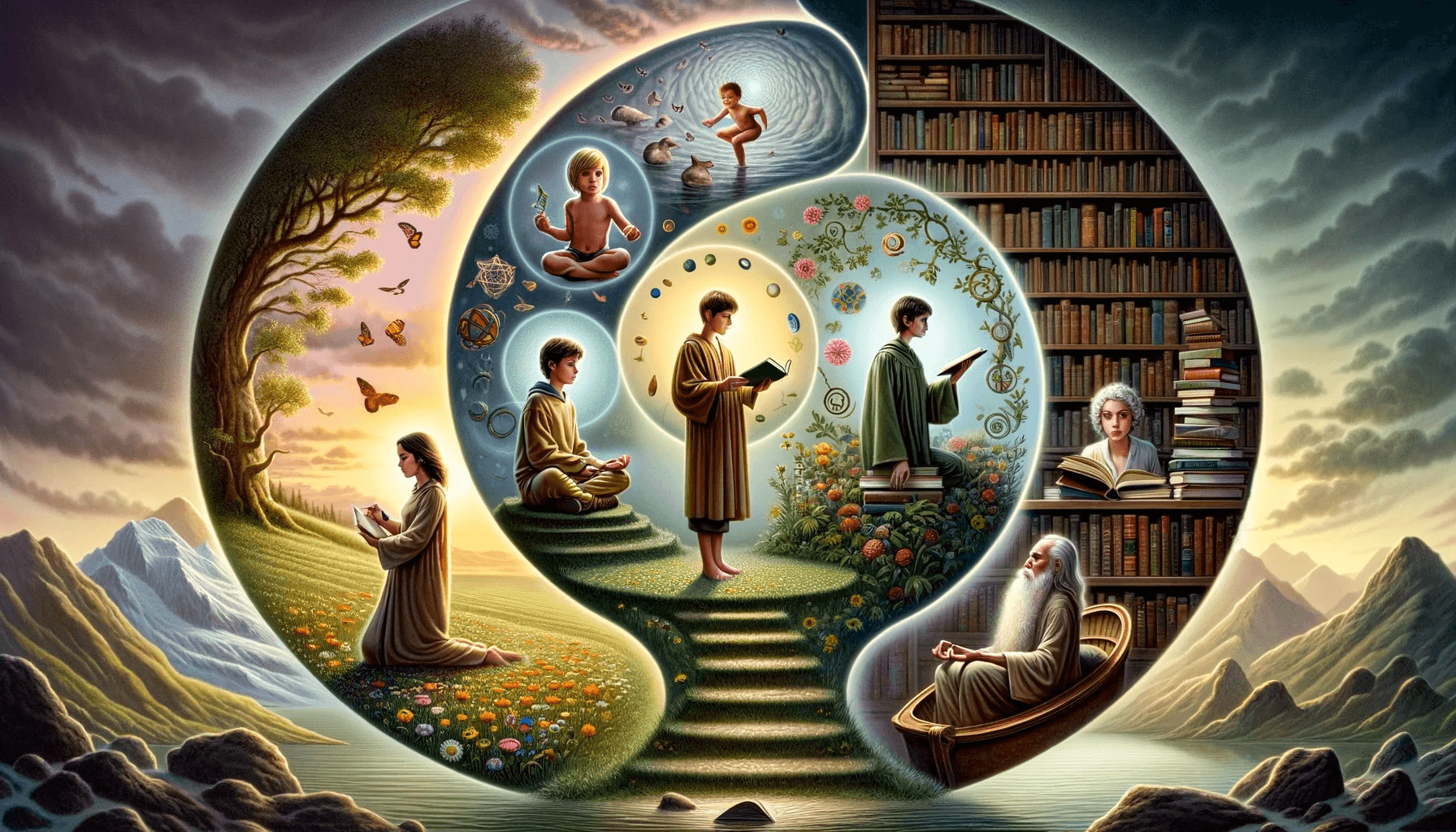
Learning
Despite different religions’ diverse beliefs and practices, the quest for knowledge and understanding is a common thread that binds them. The desire and ability to learn are two main attributes defining humanity. We have become the dominant species due to our capacity to learn about the world and pass on that knowledge to future generations. Each generation builds on the knowledge cumulatively acquired by the previous generations. What we know as hunter-gatherers versus what we know now is nothing less than miraculous when we consider that all this knowledge is simply the work of our 3-pound brains.
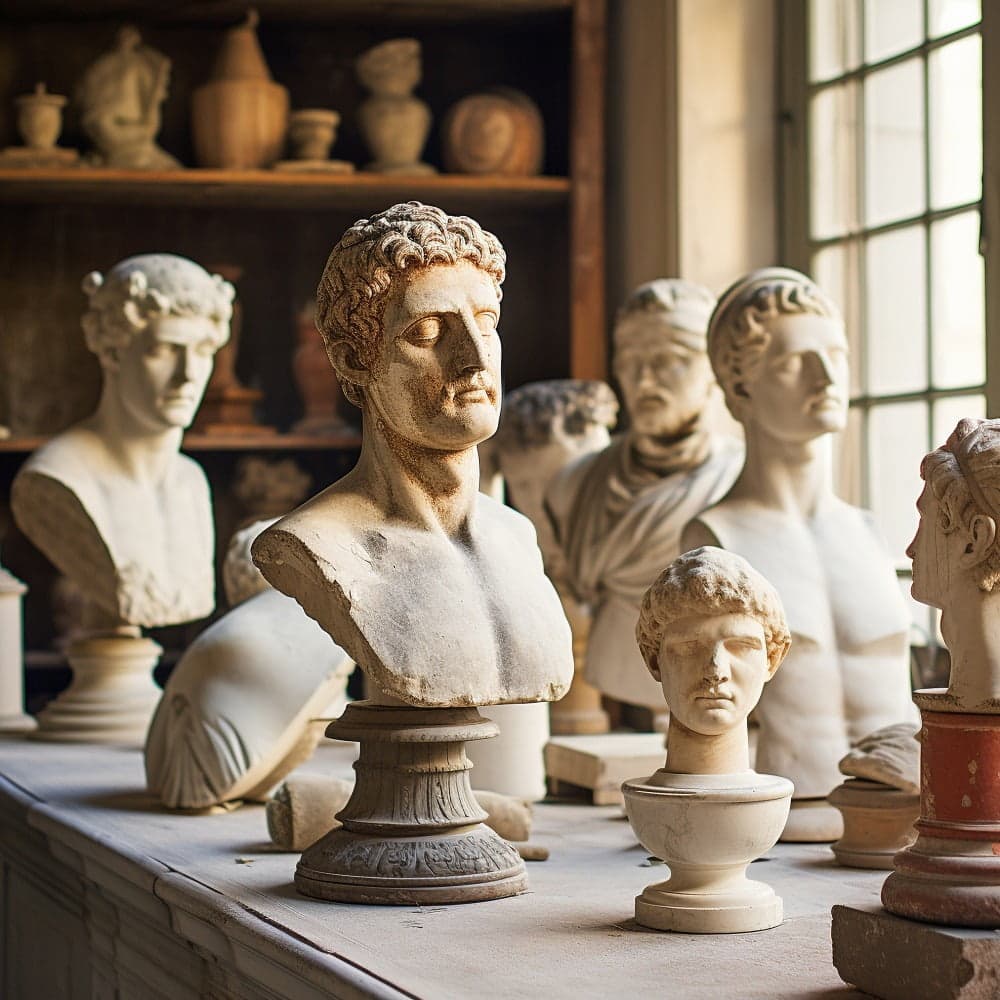
Metaphorical Interpretations
What is a metaphor?A metaphor compares or substitutes something abstract and less immediately present with familiar palpable imagery. Just as language is very effective at communicating information, metaphors convey new and complex information using basic and familiar concepts.All religious scriptures use metaphors to transmit ideas about God and divinity. The Hindu Upanishads are filled with metaphors. Some common metaphors – like clay, the sun and the lotus — can be found across religions. Veils and clouds are often used as metaphors of ignorance across religions to suggest that they must be removed so that the knowledge shines forth.
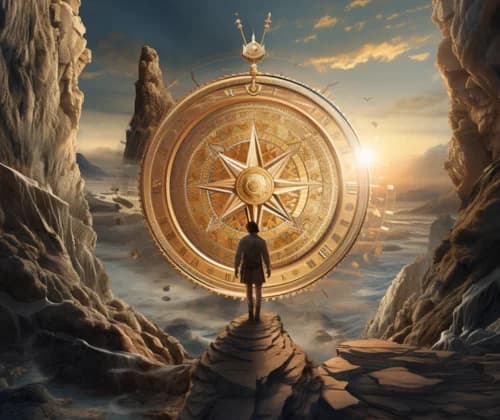
Moral Compass
What does it take to be a morally good person? Over the centuries, thought leaders and our scriptures have offered a variety of answers to this question. ‘Morality’ simply can be defined in terms of respect for and our obligation to others. Where and how do we learn to be moral?
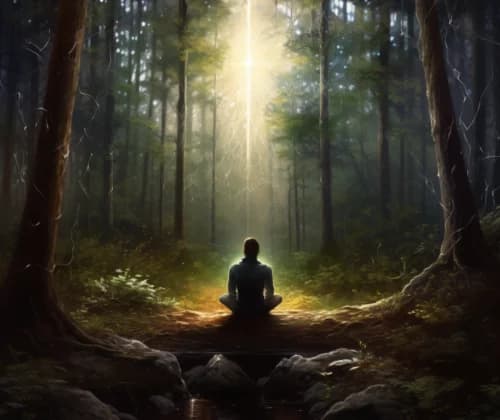
Mysticism
Mysticism is a concept that transcends religious boundaries and can be found in various religions and spiritual traditions around the world. Mysticism generally refers to a direct, personal, and experiential relationship with the divine or transcendent reality, often characterized by a sense of union, oneness, or intimate connection with the divine. Mystical practices are typically aimed at cultivating spiritual awareness, inner transformation, and a deeper understanding of the nature of existence and the divine.

One Faith, Many Paths – But One Truth
If Religion Is Meant to Unite, Why Does It Divide Us?
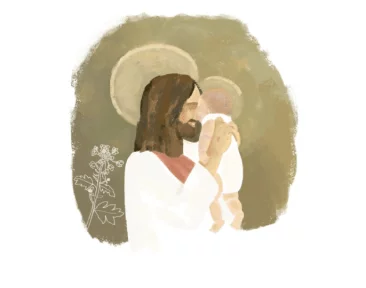
One Universal God
I was born in Old Delhi, which remains one of the most religiously pluralistic places in the world. As a child, I was exposed to the living traditions of many religions. In our family temple we had the picture of Prophets from all religions and a copy of holy Quran, since there is no picture of prophet Mohammed. My dad would read from various scriptures and say that God has incarnated as Krishna, Christ, Mohammed, Buddha, and so on. He would quote the Rig Veda (1.64.46): “Ekam sat vipra bahuda vadanti” (truth is one, but called differently by many). I was always convinced that there is only one God, and in adulthood the commonalities of religions were reinforced as I have looked more closely at the scriptures of all major religions.
Ordered Universe
Many people believe that the order of the universe is evidence of the existence of a higher power. After all, how else could such an intricate and perfect system have come into being? Others believe that the order of the universe is simply a product of natural laws and processes.
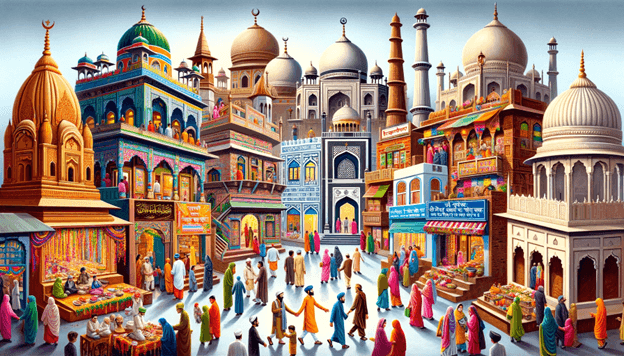
Pluralism
Pluralism is a concept that recognizes and respects the diversity of beliefs, values, and practices across different religions. Despite the vast array of doctrines and rituals, several commonalities underscore the essence of pluralism in religion. These commonalities include the emphasis on ethical living, the pursuit of transcendence, the importance of community, and the quest for understanding and tolerance.

Power Of 108
We’re excited to note that, through our weekly newsletters, we’ve now shared an astonishing 108 commonalities across the world’s religions— Yes 108, a truly remarkable number, and not a mistake!

Prayer Beads
Prayer beads, also known as rosaries, malas, or tasbih, are used in various religious and spiritual traditions around the world as aids for counting prayers, recitations, or chants.
Religions as humanity’s Meaning-Making endeavors
Repetition carries significant value, anchoring our understanding and actions. Just as physical training builds muscle memory, our brains are trained through repeated thoughts and phrases. Religions often use daily recitations, like mantras, which serve as guiding points in life. These mantras, when repeated, can alter our neural pathways, even when we don’t fully grasp their meaning. For instance, Jews recite the Shema Yisrael daily to affirm the Oneness of God, while Muslims have their daily prayers and Quranic passages. Followers of Baha’i faith praise God by reciting ‘Allah’u’Abha’ 95 times a day, and Confucianism emphasizes memorization and repetition in education. In Indian religions, ‘Om’ signifies oneness and is frequently used as a greeting. Sikhs say ‘Wahe Guru,’ and Transcendental Meditation uses unique mantras to quiet the mind. Mantras have the power to shape our thoughts and actions, fostering a more enlightened and loving self through repetition.
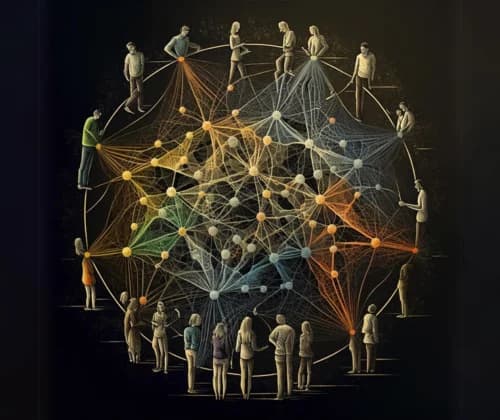
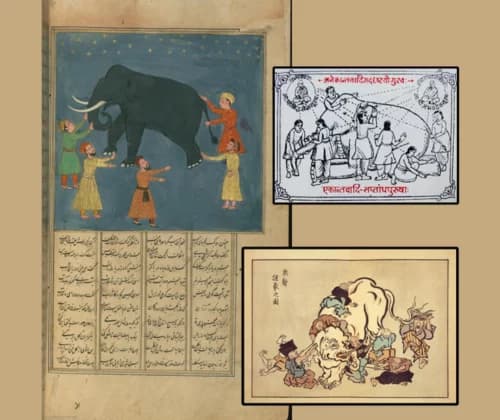
Religions as humanity’s Meaning-Making endeavors
The key message is that meaning-making is a deeply personal and cultural process, resulting in a wide spectrum of interpretations and beliefs. The text encourages tolerance and appreciation for the rich diversity of meaning-making approaches across different faiths and traditions. It suggests that recognizing these differences as complementary rather than conflicting can promote understanding and unity among people of diverse backgrounds, ultimately contributing to a more enlightened and harmonious global society. In essence, it underscores the importance of celebrating and respecting the various paths that humanity takes on its quest for meaning, just as we savor the diversity of cuisines from different cultures to satisfy our physical hunger.

Sacred Time
Time wields immense power over us, an unyielding force we cannot halt or invert. It distinguishes us from the divine, shaping events across cosmic expanses. The universe and our planet span billions of years, dwarfing our brief lives. Gods resemble celestial bodies, enduring eons, occasionally bending time. They perceive time cyclically, unlike our linear view. Scientific theories like Einstein’s hint at time’s nonlinearity, yet we’re trapped in its apparent unidirectional flow. Our fleeting lives compared to celestial giants prompt questions about our perception of time and reality. Immersed in aeons like gods, our reality would transform profoundly.
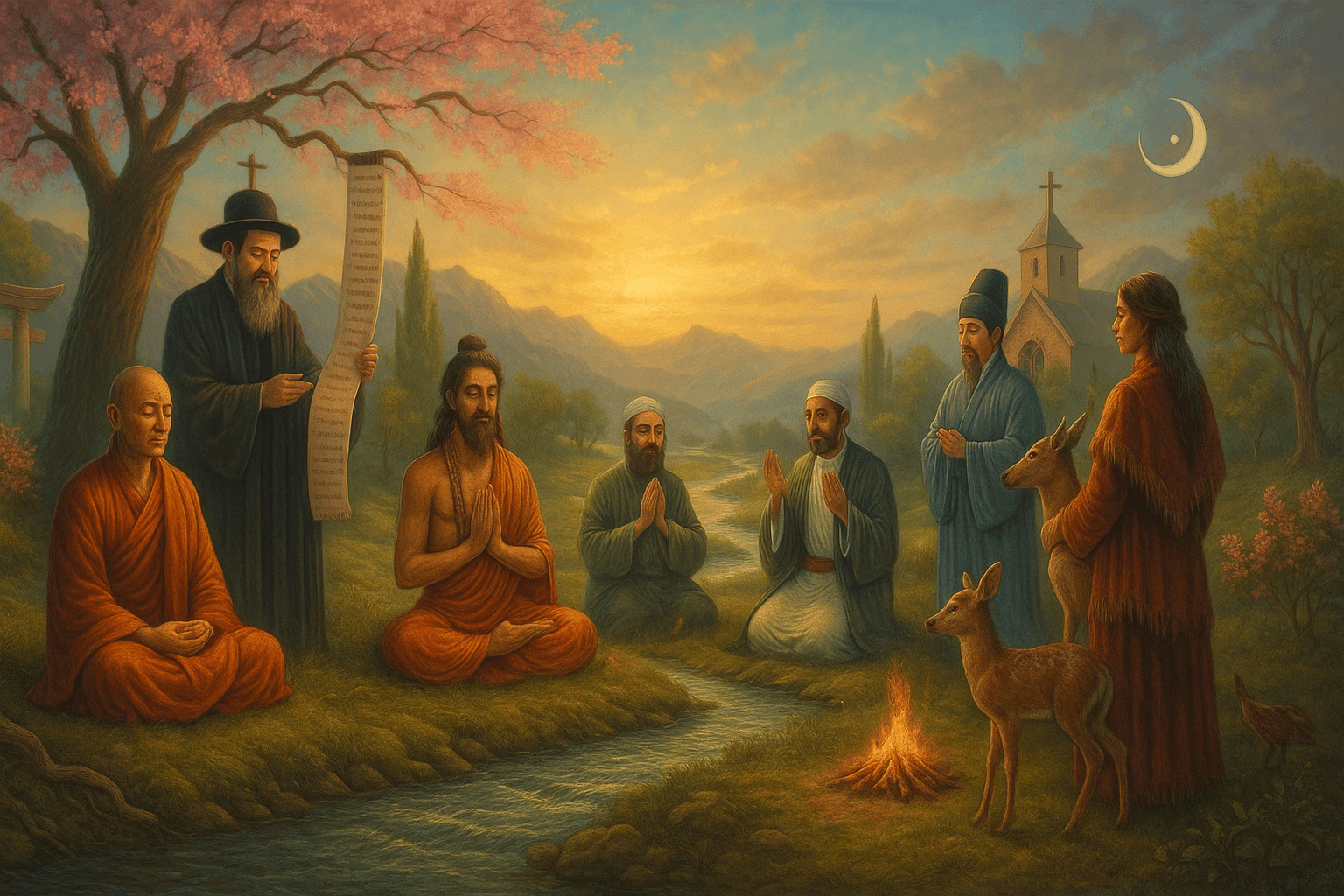
Sacred Wisdom Across Faiths: What The World’s Religions Teach Us About Living Well
In a time when differences often dominate headlines, it’s deeply grounding to recognize how much common ground exists among the world’s spiritual traditions. From the whispered prayers in ancient temples to the vibrant chants in modern mosques, humanity has long sought meaning in life’s profound mosaic of joys, sorrows, and mysteries. While each spiritual tradition speaks through its unique language and symbols, a careful listening reveals a shared repository of wisdom.

Sacred Words
Language serves as our most potent tool for creating meaning. It shapes our thoughts, turns them into reality, and connects us with others. The words of gods and divine beings hold immense power, often equated with divinity in various religions. For instance, Abrahamic religions consider God’s name sacred, linked to his essence. In Christianity, Jesus is the incarnate Word, while in Islám, God’s single utterance “Be” created the universe. Hinduism attributes significance to the syllable “Om,” associated with creation.

Salvation: A Common Theme Across All Religions
Muslims around the world observed Ashura — the Islamic day of remembrance for the martyrdom of Husayn ibn Ali, the grandson of the Prophet Muhammad. It also commemorates the day when God saved Moses and his people from Pharaoh in Egypt by parting the Red Sea.
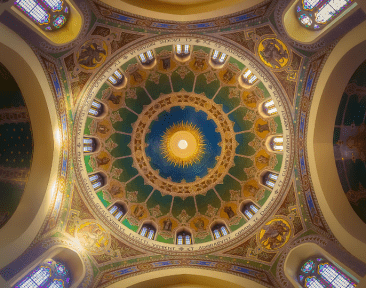
Seeing Order in the Universe
This is the second in a series of articles on commonalities across religions. In the introductory article for this series, we refer to these commonalities as “common threads” because they are woven throughout human history and reflect the fact that we are all made of the same fabric. However, there is great diversity and beauty in the many different colors of dye observed across cultures and belief systems.
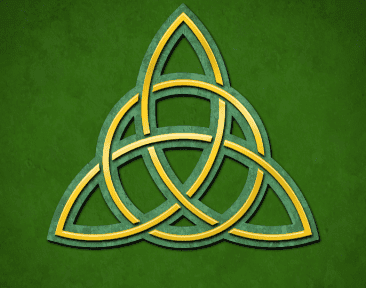
Significance of Three
Past, present, future; length, width, height; small, medium, large—there are many groupings of 3 that we’ve used throughout human history to describe and organize the world around us.
Suffering
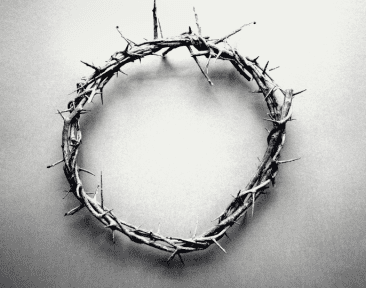
Suffering is a prominent theme in Christianity and is viewed as inevitable due to sins of humanity. However, Christians take solace in knowing that nobody suffers alone because Christ suffers with them and has sacrificed his life to atone for their sins. Judaism teaches that suffering is a way to come closer to God and encourages the followers to turn to prayers as a means of finding comfort. Both Islam and the Baha’i religions believe God to be just and merciful and see suffering as tests through which God judges people and rewards those who endure suffering with patience and unwavering faith.
The Flow: Where Psychology Meets Spirituality
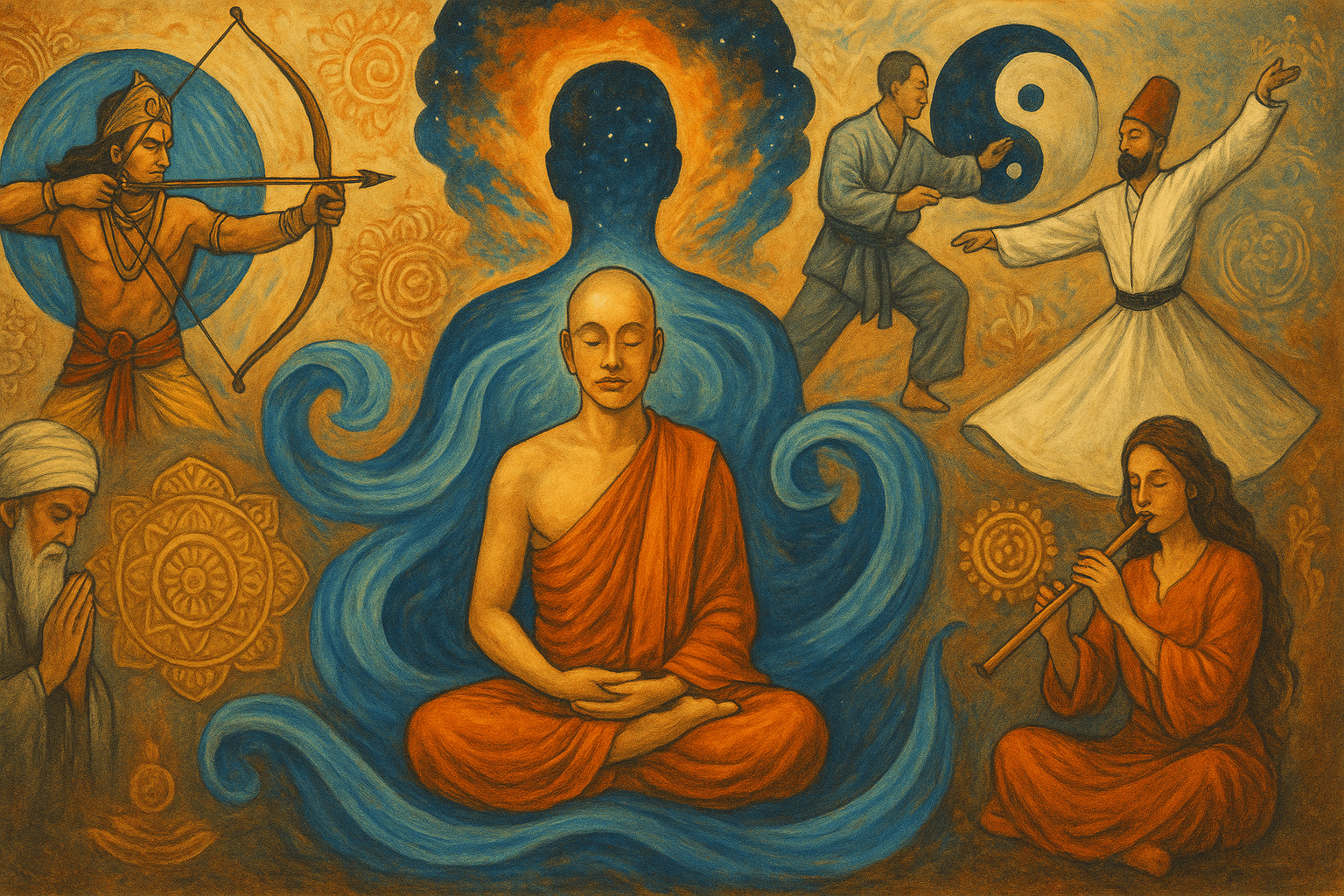
Flow: Universal Pathways to Transcendence
The Hero’s Journey
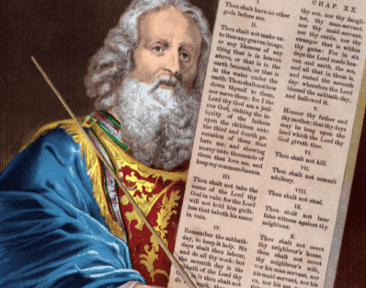
“Mythology, literature, and folklores often share a common theme: the protagonist embarking on a quest, facing challenges, and achieving transformative victory. Joseph Campbell’s ‘The Hero with A Thousand Faces’ describes this as the hero’s journey – a cyclical adventure of self-discovery. Religious texts echo this, depicting figures like Moses, Jesus, and Mohammad on journeys driven by purpose, testing faith in deserts and gaining revelations.
The Journey Beyond Knowledge
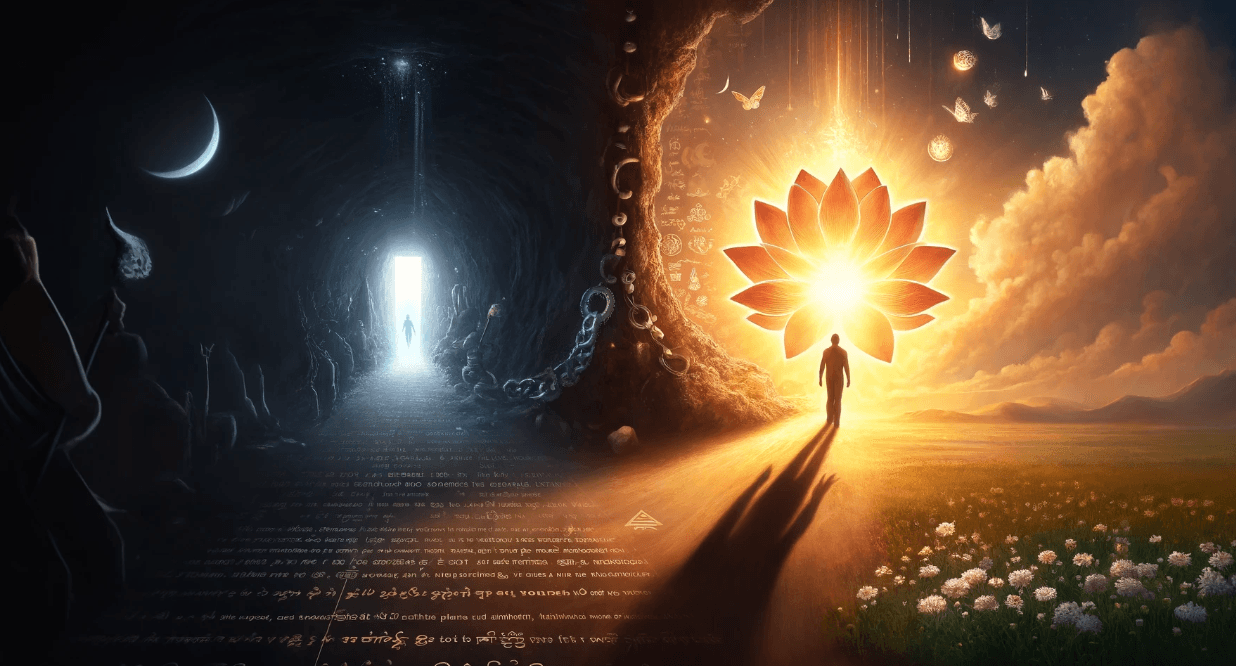
In our fast-paced digital age, where information doubles every few hours, ancient wisdom traditions offer us a surprising insight: Sometimes, knowing less is knowing more. That actual knowledge emerges not from the aggressive acquisition of information but from the gentle dissolution of our preconceptions.
The Triple Lens in the Human Search for Meaning: Science, Philosophy, and Religion
In the perennial human quest for understanding and significance, three formidable pillars rise above the intellectual landscape: science, philosophy, and religion. Each offers a distinct lens through which to contemplate existence—dissecting its mechanisms, interrogating its meanings, and illuminating its mysteries. Science reveals the “how” of the universe, exposing its intricate workings through empirical observation. Philosophy grapples with the “why, “constructing systems of thought to navigate ethics, knowledge, and reality. Yet there remains a third domain—religion—which engages with questions and yearnings that neither science nor philosophy can fully satisfy. Religion addresses the existential hunger for ultimate meaning, transcendent hope, and communal belonging—dimensions of human life that often lie beyond the reach of reason or measurement.
The Wellspring Within: How Spirituality Nourishes Science, Philosophy, and Religion
Spirituality, at its core, is the pursuit of meaning and understanding that transcends our ordinary sensory perceptions. It’s the recognition that reality extends beyond what we can see, hear, touch, taste, or smell, and an endeavor to grasp this deeper truth by engaging all our mental and conscious faculties.
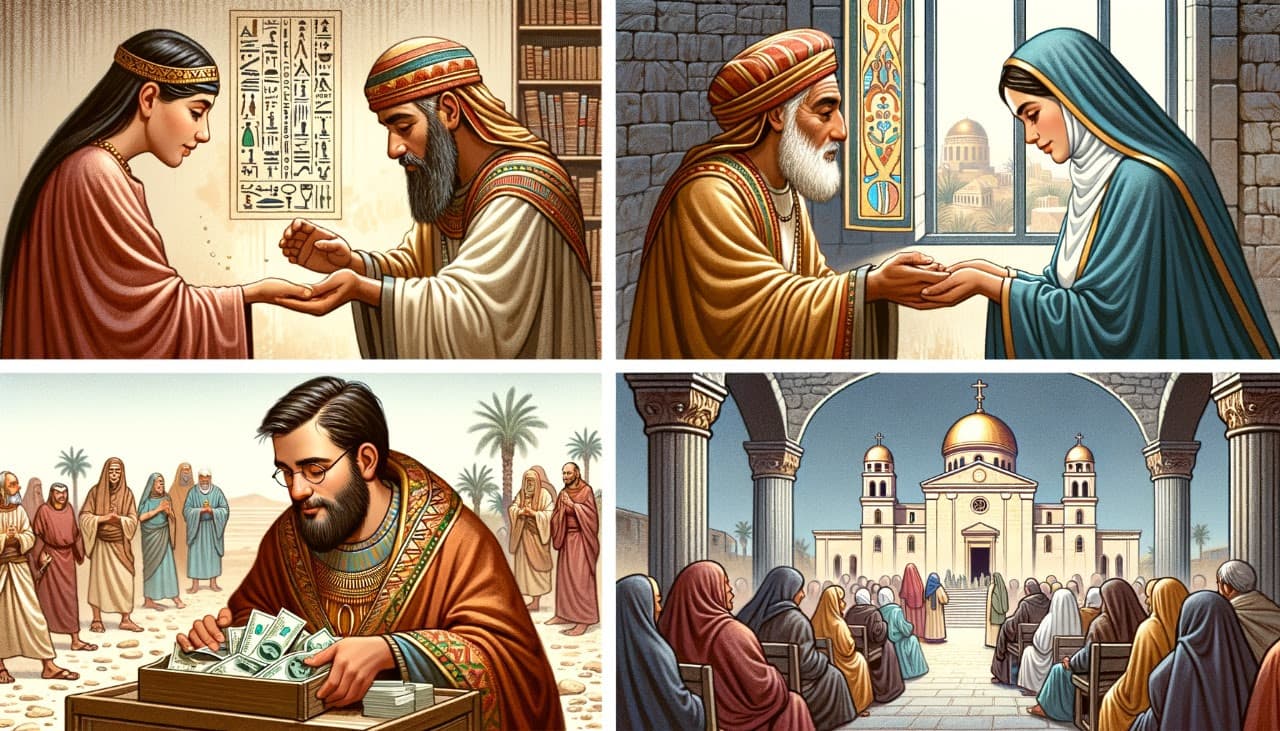
Tithing
Tithing, the act of regularly giving a specific portion of one’s income, is significant in many religions. While the concept may appear financially restrictive, its deeper meaning transcends mere money. Tithing not only fosters a connection between the giver, the recipient, and the divine, but also leads to profound spiritual growth and social responsibility.
Transcendent Reality
Transcendent reality, a concept that permeates various spiritual and philosophical traditions, refers to an existence beyond the tangible world—a foundational essence that underlies all that is. At the heart of most religious traditions lies the recognition of an ultimate reality that extends beyond the material world. In Hinduism, this manifests as Brahman, the supreme universal spirit. Buddhism speaks of Śūnyatā (emptiness) and Nirvana. The Abrahamic faiths—Judaism, Christianity, and Islam—all point to a singular divine being. Taoism describes the Tao as the fundamental essence of existence.Other philosophies present the idea of a transcendent state beyond the cycle of birth, death, and rebirth. This state is described as pure bliss, free from suffering and ignorance, representing the ultimate goal of spiritual practice—the realization of the true nature of reality.
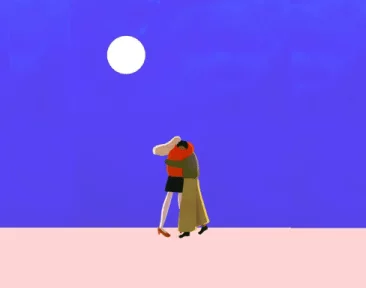
Universal Love – A Secret Of A Flourishing Life
We can truly flourish if we simply engage in our three deepest longings of loving, learning and playing. Love springs from the need to overcome separateness.
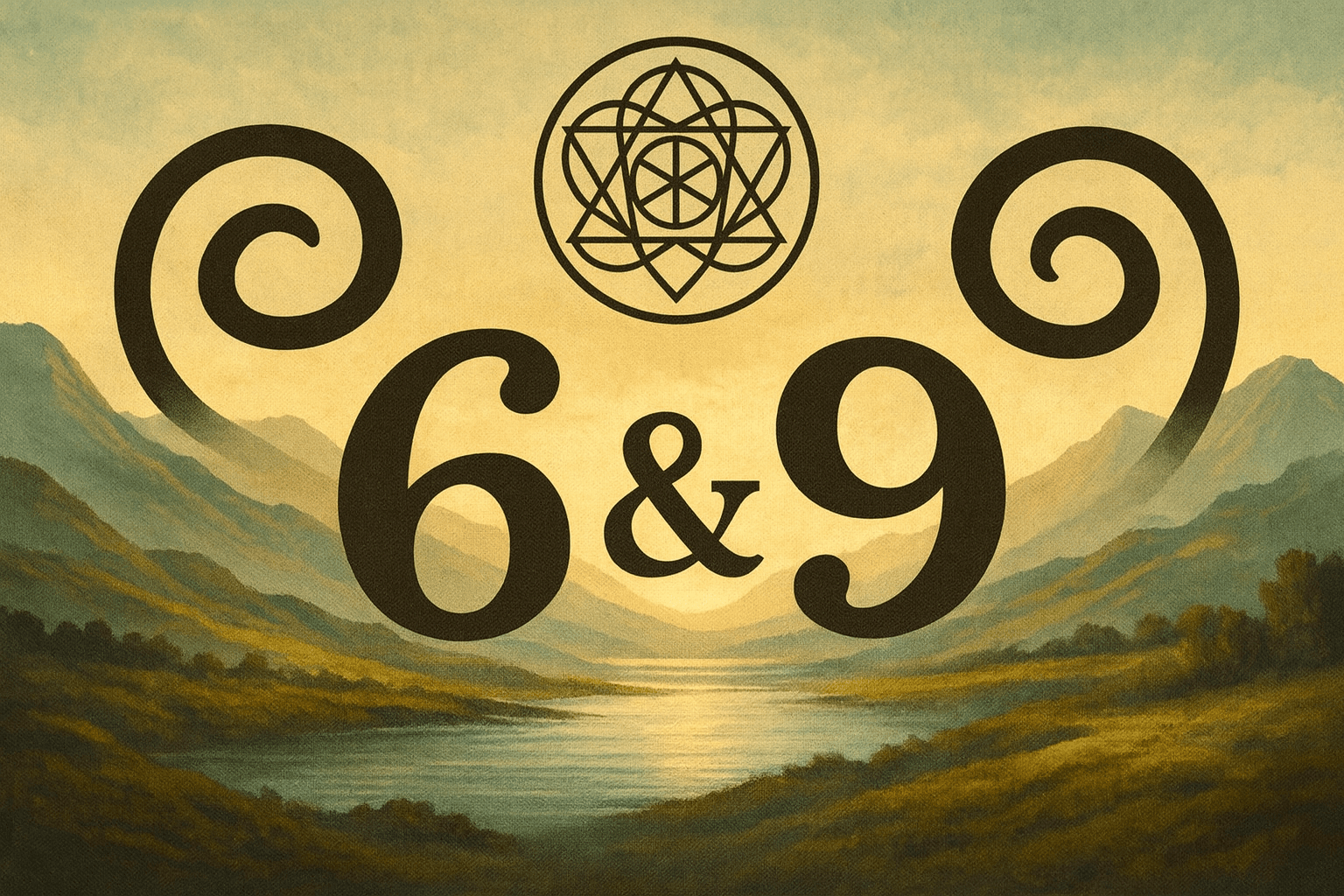
Weekly Wisdom: Exploring The Meaning And Significance Of Numbers 6 And 9
Previously, we shared with you our findings on some of the many examples of the number ‘3’ that prominently appear across various religious and cultural traditions. However, multiples of 3, 6, and 9, in particular, are just as prominent. The great inventor Nikola Tesla was obsessed with these numbers, believing them to be fundamental components of the very fabric of reality. Accordingly, he would incorporate 3s, 6s, and 9s into as many parts of his daily routine as possible; for instance, only staying in hotel rooms that were divisible by 3. While we need not go to such extremes in our own lives, a little reflection on the significance of these numbers can be a source of wonder and inspiration.
51 topics — scroll to see all