
Course category
Courses
Browse the UEF course library.
6 courses
Topics

A Life of Learning: A Love Story
I was pleased to read the August 10 post in the Universal Enlightenment & Flourishing Newsletter on the theme, “A Lifelong Quest: How We Learn Religion Differently Through Life Stages”. As I get older — I just turned 74 — I appreciate the theme of “a lifelong quest” all the more. As I look back over my long and mostly happy life, I have been asking myself what kind of learner I have been, including as a religious person, all these decades. As a boy, I started reading novels at about six years old, and I still read them now (invigorates the imagination). In high school, I was a lover of language learning, and as a double major in philosophy and classics, I read widely in the ancient and medieval Christian tradition in college and a few later, in seminary, preparing to become a Catholic priest (I was ordained in 1978), I learned much Christian theology.

Afterlife
In August, Taoists and Buddhists celebrate the Ghost Festival in China, as an occasion on which the dead come to dwell among the living, who in turn provide these departed spirits with offerings and other rituals designed to alleviate any suffering they might experience in the afterlife. In Japan, a variation of this festival, known as Obon, will be held between Saturda August 13 and Monday August 15.

All Religions Advocate for Serving the Underserved
Throughout history, religion has served as a moral compass guiding the behaviors, attitudes, and actions of humanity. Despite the diversity of religious traditions, a common thread running through all of them is the call to compassion, kindness, and service—especially towards the underserved.From the teachings of Christianity to the practices in Sikhism, serving the underserved is a cornerstone of spiritual life across all major religions. Whether through the concept of Zakat in Islam, Seva in Sikhism, or Tzedakah in Judaism, the focus remains clear: helping the poor, needy, and marginalized is not just encouraged but required as an expression of faith and righteousness.
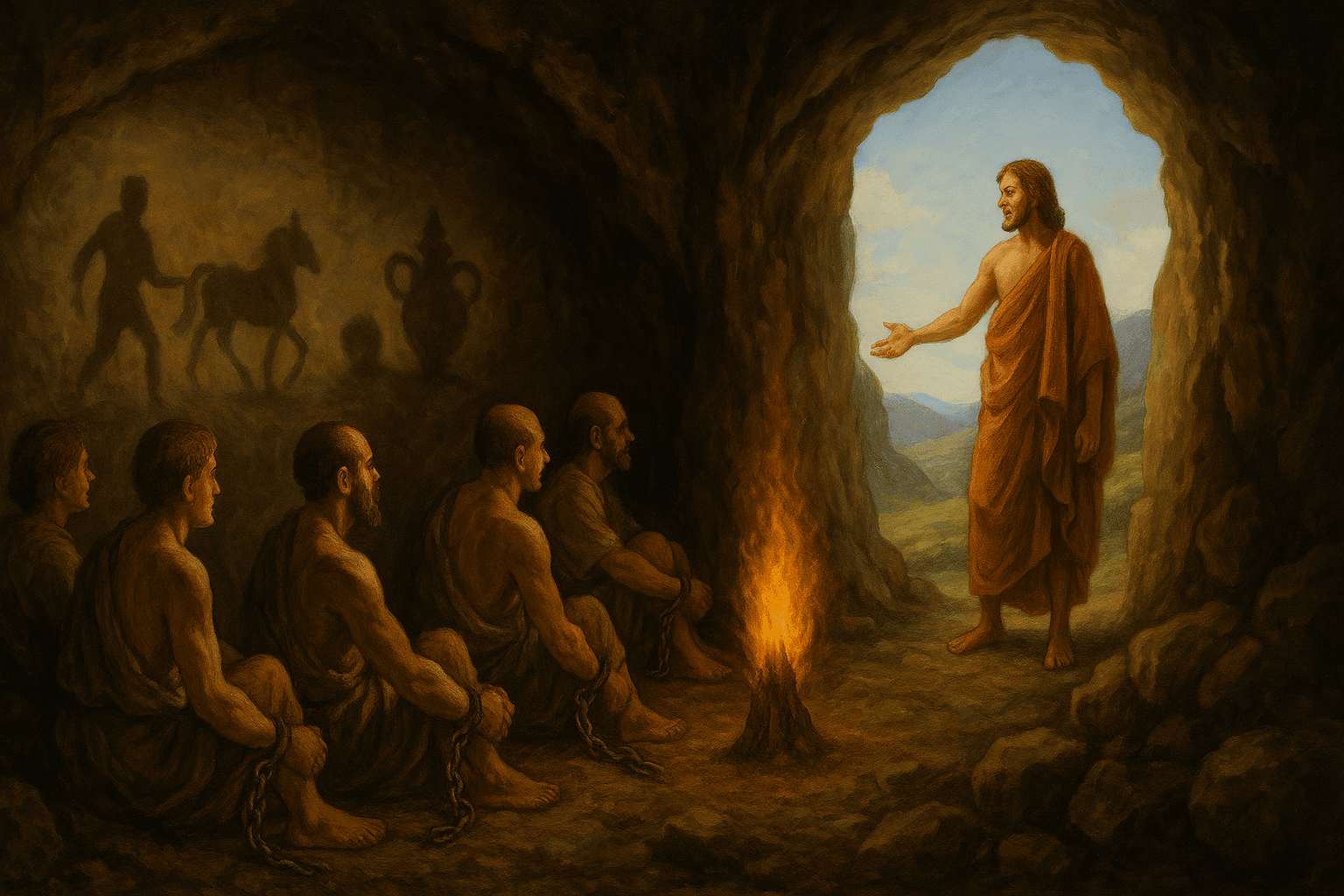
Allegory Of Caves In Diverse Religious Traditions
The allegory of the cave is a philosophical concept introduced by the ancient Greek philosopher Plato in his work “The Republic”. It describes a scenario where people are chained in a cave and only able to perceive the shadows of objects projected on the cave wall, mistaking those shadows for reality. The allegory serves as a metaphor for the limited perception and understanding of the material world, as well as the possibility of attaining higher truths through philosophical inquiry and enlightenment. While there may not be an exact equivalent of the allegory of the cave in all religions, there are similar concepts or teachings in various religious and spiritual traditions that convey similar ideas of illusion, ignorance, and enlightenment.

An Introduction to Interconnectedness

Apophatic Language
Have you ever stood beneath a star-studded sky, overwhelmed by its vastness and the mysteries it holds? That sense of awe, the feeling that words fall short in capturing the immensity of the experience, is precisely what apophatic language seeks to evoke in religious traditions across the globe.
6 topics — scroll to see all